As global travel stabilises and corporate confidence strengthens, India’s outbound MICE sector is entering a more deliberate phase of growth. Corporates are no longer choosing destinations purely for novelty or cost advantage. Instead, decisions are increasingly driven by experiential value, connectivity, operational reliability and geopolitical stability.
Industry leaders say that while traditional favourites remain strong, emerging destinations and deeper cultural experiences are shaping the next phase of Indian corporate travel.
Emerging Destinations Gain Momentum
According to Birju C Gariba, Founder and CEO of Iskra Events & Celebrations, Indian clients are becoming far more open to exploring new destinations.
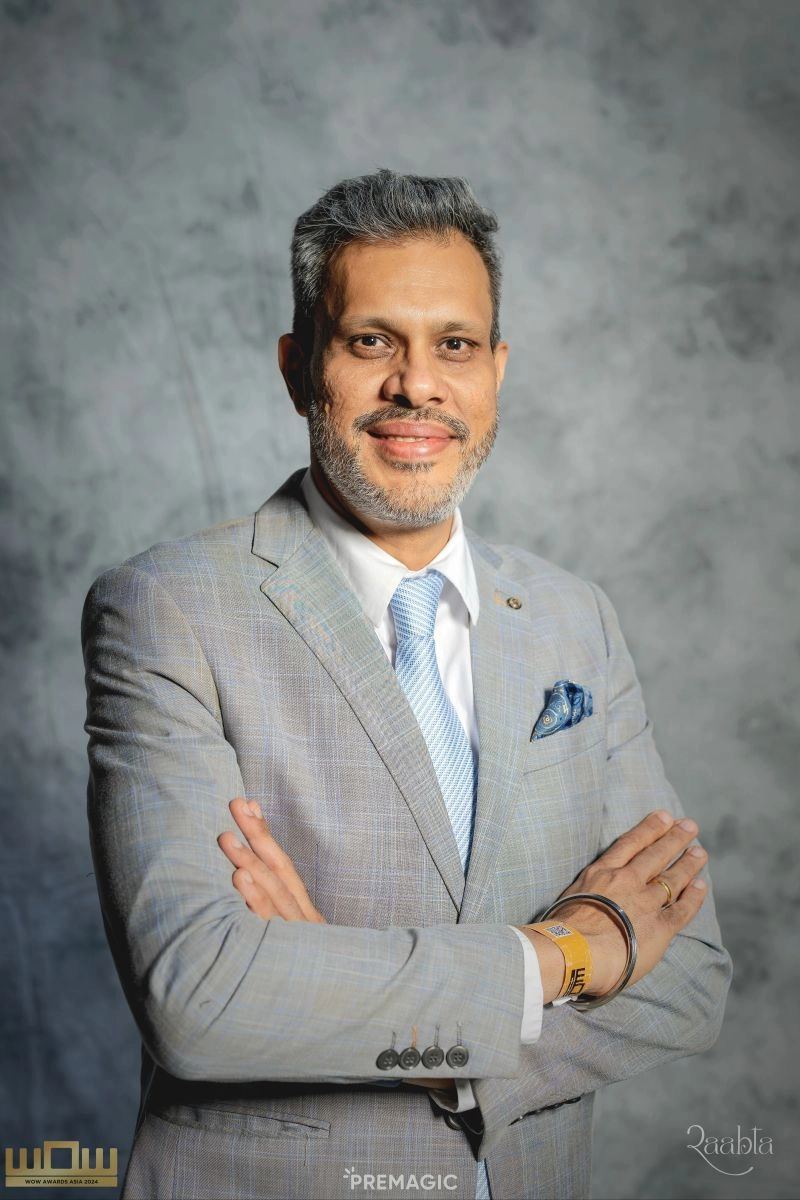
“With doors opening across the globe, our clients are no longer restricted to the usual suspects. They are happy to explore newer destinations and even new cities within repeat destinations.”
Birju C Gariba
Founder & CEO
Iskra Events & Celebrations
Gariba notes growing demand for Australia, Georgia and Japan, alongside emerging options like Taiwan, which are attracting interest for offering distinctive experiences.
However, practical considerations remain central to destination selection. “The key factors are connectivity, ease of visa, pricing — though that can be subjective — and increasingly the geopolitical relationships between countries,” he explains.
At the same time, traditional markets across Europe, the Middle East and the Far East continue to remain strong.
Similarly, Dudley Drego, President – MICE at Hyperlink Brand Experience, points to Southeast Asia as a particularly strong region for Indian corporate groups.
“Vietnam, Bali and Malaysia continue to gather momentum in the Indian MICE market.”
Dudley Drego
President – MICE
Hyperlink Brand Experience
Post-pandemic policy decisions have played an important role in driving this growth. Improved connectivity, simplified visa procedures and more flexible airline group policies have made these destinations easier to access for large corporate movements. “In Vietnam’s case, the introduction of direct flights between multiple Indian and Vietnamese cities has significantly boosted demand,” Drego adds.
Beyond Asia, George Varghese, Head of MICE at Phase1 Destinations, observes increasing interest in destinations that offer unique experiential narratives.

“Indian corporates today are choosing destinations based on the story and impact they can create — not just the stamp on the passport.”
George Varghese
Head of MICE
Phase1 Destinations
Japan’s Tokyo–Osaka–Kyoto circuit is gaining traction for leadership off-sites, while South Africa’s Cape Town and Garden Route remain strong for incentive travel thanks to their combination of scenic diversity and value.
Meanwhile, the Nordic region — including Finland, Norway and Iceland — is attracting top-performer groups seeking rare experiences such as Northern Lights viewing, glacier dining and sustainability-focused programming.
Experiences Replace Traditional Itineraries
Another clear shift across outbound MICE programming is the move away from standard sightseeing toward experiential itineraries.
Gariba notes that corporates increasingly expect programs that deliver memorable, outcome-driven experiences. “Experiential itineraries have definitely replaced touristic itineraries. Clients want something unique that becomes a talking point and reinforces the purpose of the event,” he explains.
Signature experiences are becoming essential — whether that means a dramatic destination-based activity, an exclusive venue setting, or a gala evening designed to leave a lasting impression.
Drego agrees that experiential design now sits at the centre of corporate programming. “Local experiences are becoming key — beach club welcome dinners, themed village environments or desert settings under the stars,” he says.
Technology-driven gala evenings and immersive production formats are also increasingly common as brands invest more heavily in recognition and celebration platforms.
Varghese adds that experiential depth has become a defining requirement. “Every program now needs a defining ‘wow’ moment — a private venue buyout, an exclusive cultural immersion or a dramatic natural setting dinner,” he says.
Faster Planning, More Strategic Decisions
While experiences are becoming more ambitious, planning timelines are becoming shorter.
Varghese notes that short-haul programs involving 400–500 delegates are now often executed within 45 to 60 days, reflecting faster corporate approval cycles.
However, destination approvals are also becoming more structured and risk-aware.
Key evaluation criteria now include:
- Air connectivity and seat capacity
- Visa reliability and processing timelines
- Budget predictability
- Experiential return on investment
- Political and travel stability
Geopolitical developments are also influencing decision-making more strongly than before.
“In some cases, corporates have paused international movements and instead created high-impact experiential programs within India,” Varghese explains.
At the same time, Gariba notes that outbound MICE from India has evolved beyond purely cost-driven decisions. “Indian MICE programs have come of age. They are now experience-driven decisions, with the right balance of pricing,” he says.
As the sector continues to mature, destinations competing for Indian corporate groups will need to deliver more than accessibility and infrastructure. Experiential depth, cultural authenticity and operational certainty are becoming the real differentiators in winning outbound MICE business.